


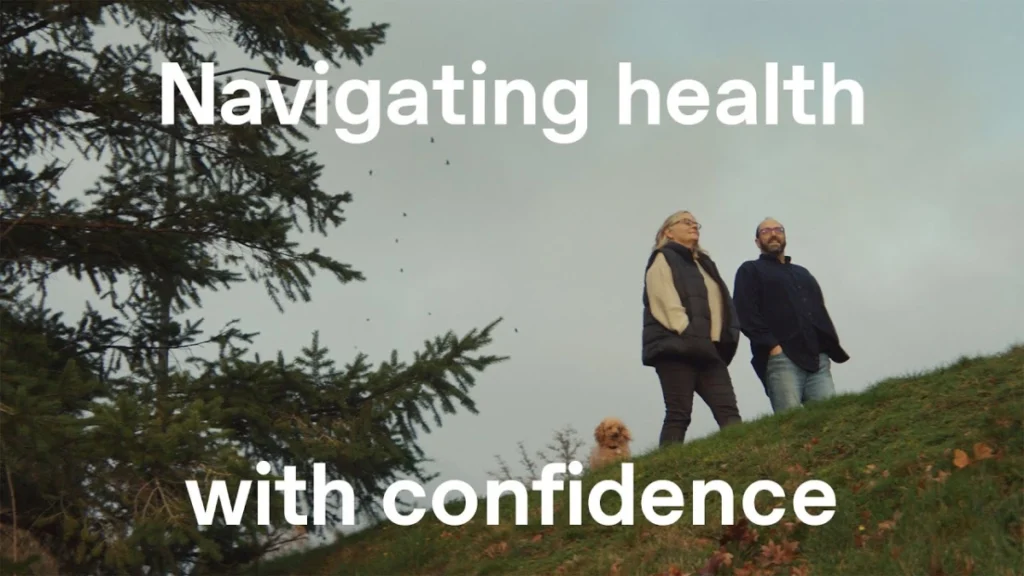
The fundamental shift in generative AI’s application to healthcare is not merely its capacity to dispense information, but its ability to translate complexity into immediate, actionable personal strategy. This pivot, showcased vividly in OpenAI’s recent product demonstration, positions AI as a crucial co-pilot in the often-opaque journey of managing personal wellbeing and chronic conditions. The video, titled Navigating Health | with ChatGPT, functions as a series of short, compelling testimonials illustrating how multimodal large language models (LLMs) are being deployed across vastly different user cases, from optimizing fitness routines for time-poor parents to demystifying high-stakes oncology reports.

This showcase effectively serves as a high-level product briefing for the capabilities ChatGPT now offers in the health space, demonstrating utility across fitness, chronic disease management, and complex care coordination. The vignettes highlight individuals across the US—Lauren, a busy mother; Gigi, managing chronic pain; Liz, navigating her son’s cancer treatment; Burt, dealing with his own serious diagnosis; and Steve, focused on dietary management—all leveraging the AI to bridge gaps in knowledge, time, and access to specialized advice.
For founders and venture capitalists assessing the viability of AI in health, the most striking insight is the model’s proficiency in personalizing advice against real-world constraints. The busy mother, faced with a scant fifteen minutes and a specific set of 10-pound dumbbells, asks the AI for a workout. The response is instantaneous and tailored, generating a realistic, context-aware regimen. This capability moves the AI far beyond static search results; it becomes an adaptive, real-time coach. The utility demonstrated here is the optimization of small windows of time, turning moments of friction—the inability to schedule a full gym session or consult a nutritionist—into opportunities for proactive health engagement.
The model is designed to augment, not replace, specialized care. For patients dealing with serious or chronic illnesses, the primary barrier to effective treatment is often the dense, jargon-laden language of medical reports and clinical communication. The video shows how patients can upload complex medical documents, such as CT scan results or oncology reports, and receive plain-language summaries and, critically, a list of structured, intelligent questions to take to their next appointment. Burt, navigating his cancer treatment, emphasizes the importance of this translation, stating: “I felt like if I understood, I would be more of an active participant in my treatment.”
This preparatory function fundamentally alters the patient-physician dynamic, transforming appointments from information-gathering sessions into high-leverage action-planning dialogues. Liz, whose son is battling cancer, noted the profound impact of having these synthesized facts ready: “It allowed us to really feel like we have the facts and our doctor is giving us his expertise, his experience, his gut instinct.” The AI acts as a sophisticated knowledge layer, ensuring that the limited time with experts is maximized for decision-making rather than basic comprehension.
The AI is not simply summarizing text; it is actively preparing the patient to co-manage their condition. This shift elevates patient agency significantly.
Furthermore, the demonstration emphasizes the power of multimodal inputs, particularly image recognition. Steve, focused on managing his diet, uses the ChatGPT app to snap a picture of his restaurant meal. The AI instantly processes the image, identifying components, estimating protein and calorie content, and even providing an “inflammation score.” This application of vision models transforms mundane daily tasks into quantifiable data points relevant to health tracking, making lifestyle management immediate and non-intrusive. Similarly, a user with eczema can photograph a clothing tag and receive an immediate assessment of potential irritants in the fabric blend. This is a critical move toward pervasive, integrated health support embedded seamlessly into daily life, providing preventative checks against personalized conditions. Burt encapsulates the core philosophy driving this development: “Empowered patients, they have better health outcomes.” This is the value proposition driving the next wave of health technology investment. The current iteration of ChatGPT in health is less about diagnosis and more about democratizing access to complex medical context, providing personalized tools that foster continuous self-monitoring and preparedness.
link