
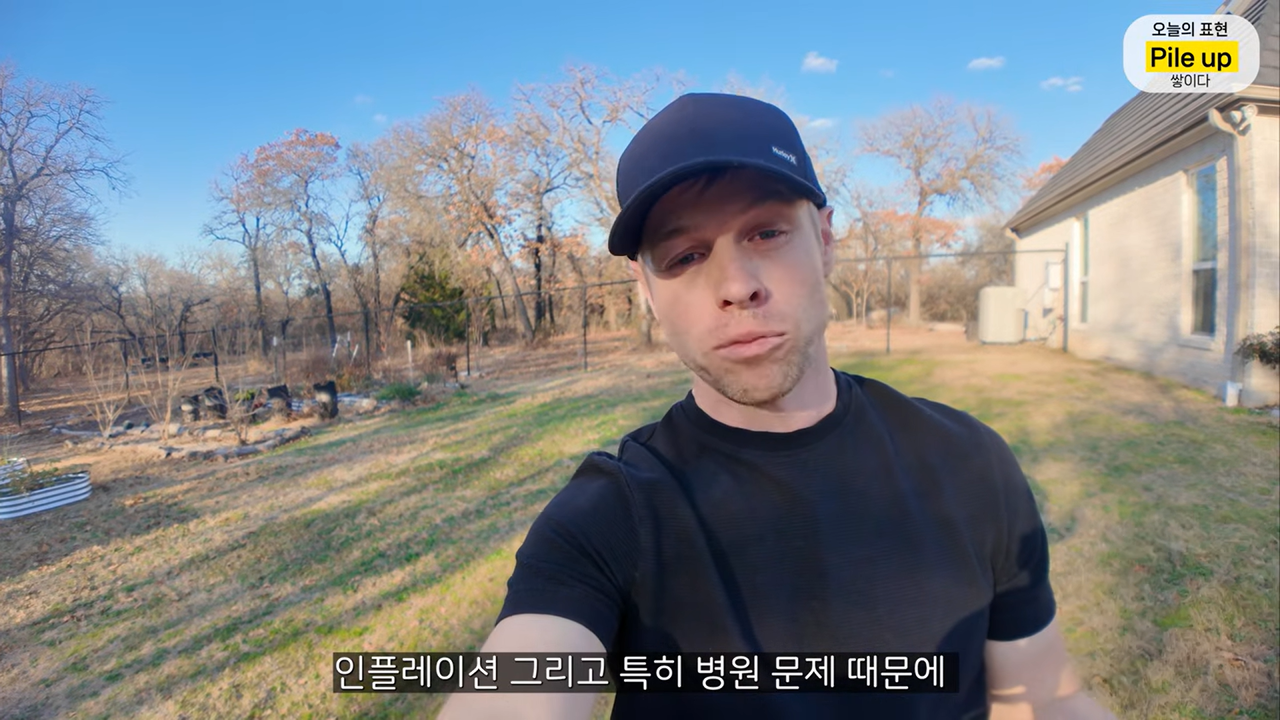
A US-based YouTuber has come under fire from some Korean commentators over claims that he plans to move to Korea to benefit from the country’s public health system, a dispute that has fed into broader anxiety about the long-term sustainability of national health insurance amid rapid aging.
The YouTuber, known as Oliver Ssam, recently posted a video criticizing the US health care system and hinting at the possibility of leaving the United States.
Although the video did not mention Korea, speculation spread online that he might return, fueled by his personal ties to the country. He worked in Korea as a teacher from 2010 before returning to the US in 2018 and is married to a Korean national.
Some online commentators accused him of seeking to “free ride” on Korea’s health care system, prompting him to publicly deny that he had decided to move to Korea.
“We only shared our situation and concerns about living in Texas,” he said in a statement posted Sunday. “We did not mention Korea or decide where we would move.”
He added that “groundless media coverage claiming that we decided to return to Korea has led to misunderstandings that we would ‘free ride’ on Korea’s medical system and has fueled a wave of negative reactions.”
The backlash followed a Dec. 26 video titled “We will give up for real… after eight years of settling in the US with a Korean wife,” in which he criticized US health care providers for charging high premiums while delivering low-quality services.
The controversy has unfolded against a renewed political debate over whether Korea’s national insurance program is vulnerable to benefit fraud and financial leakage linked to foreign subscribers.
During an October parliamentary audit, the main opposition People Power Party lawmaker Choi Bo-yun urged the Ministry of Health and Welfare to take steps to prevent losses tied to foreign enrollment.
“In 2024, 1,700 foreign nationals committed insurance benefit fraud totaling 2.56 billion won, with more than 70 percent involving Chinese nationals,” Choi said. “The system still has structural loopholes, such as benefits being paid even after eligibility is lost.”
Health Minister Jeong Eun-kyeong said most of the cases cited stemmed from employers failing to promptly report the loss of eligibility to the National Health Insurance Service. Other lawmakers have called for reciprocity rules, arguing that coverage for foreign nationals should be limited to standards comparable to those their home countries apply to Koreans, particularly for high-cost and selective treatments.
While Korea’s insurance-based healthcare system is widely praised for fast, low-cost access, its outlook is increasingly strained by rising spending and a shrinking workforce. The National Health Insurance Service has said the system is expected to enter a deficit in 2026, with accumulated reserves projected to be depleted as early as 2028.
Civic groups and experts, however, warn that focusing on foreign subscribers risks distorting the debate.
“Foreign subscribers (to NHIS) play an important role in supporting Korea’s economy in sectors such as agriculture, construction and small businesses,” the National Health Insurance Service union said in a June statement. “Groundless accusations of free riding could undermine Korea’s global relations and damage its international image.”
According to National Health Insurance Service data, coverage of foreign nationals has generated a surplus for eight consecutive years since 2017, rising from 572.9 billion won in 2020 to 943.9 billion won in 2024. Coverage of Chinese nationals also turned to a surplus of 5.5 billion won after eligibility rules were tightened in April 2024.
“Benefit fraud should be strictly regulated, but people who come to Korea to work or marry — because the country needs them — should be covered by the national health insurance system,” said Lee Byoung-hoon, a sociology professor at Chung-Ang University.
“Although anti-foreigner or anti-China sentiment may emerge, as seen in some Western countries amid political shifts to the right, it is important for policymakers to ensure society does not move in that direction.”
link