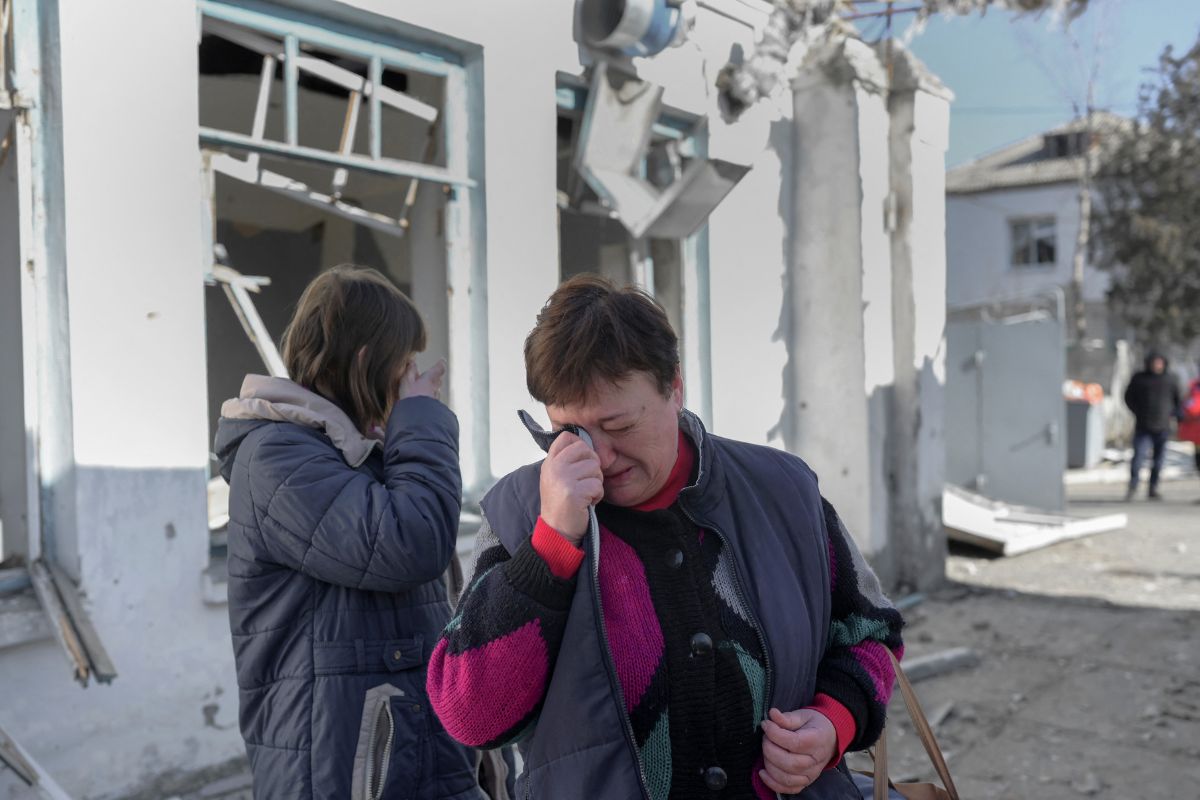
As we enter the fifth year of the Russian full-scale invasion of Ukraine, the Ukrainian people continue to endure a significant burden that is impacting their health and mental well-being. Expediting Ukraine’s journey towards EU membership would not only establish a long-term vision beyond the war, but also provide an important opportunity to help reform Ukraine’s healthcare system.
Close to 2,600 attacks on Ukraine’s health care system have been documented since 24 February 2022. Over 1,380 attacks have damaged or destroyed hospitals and clinics and at least 360 health workers have been killed. From 2024 to 2025, the number of documented attacks on health surged by almost 50% from 2024 to 2025. This is part of Russia’s systematic effort to demoralise Ukraine.
Constant exposure to violence, trauma, and death significantly heightens the risk of developing post-traumatic stress disorder (PTSD) and other mental health conditions. PTSD affects soldiers, veterans, and former prisoners of war, but also extends to the broader Ukrainian population. Children abducted by Russia have endured especially traumatic experiences. Additionally, internally displaced persons (IDPs) face heightened anxiety from losing their homes and related insecurity.
According to a recent study among Ukrainian soldiers exposed to combat, 45.9% have been diagnosed with PTSD, while 21.5% are suffering from complex PTSD. Additionally, 34.4% have been diagnosed with major depression. The latest WHO Health Needs Assessment documents that 70% of the Ukrainian population has reported experiencing mental health issues and chronic stress.
At the same time, disinformation surrounding mental health in Ukraine is a key component of Russia’s hybrid warfare. Russia falsely claims that the number of mentally ill people in Ukraine, and in particular in its military, is rising due to actions of the Ukrainian government. The only way forward to push back on these claims is to address the structural issues and ”build back better” Ukraine’s healthcare system. Enhancing societal resilience is vital not only for winning the war, but also for securing the country’s future beyond the conflict.
Olena Zelenska, the First Lady of Ukraine, has addressed these challenges in promoting the All-Ukrainian Mental Health Programme, ‘How Are You?’. In 2025, Ukraine adopted a new law titled ‘On the Mental Health System in Ukraine’, aiming to reform the existing framework by shifting from a centralised approach to a more community-based system.
Other initiatives, such as UN Women Ukraine consistently address mental health issues, including gender-based violence. The World Health Organization (WHO) has provided mental health and psychosocial support training for over 1400 people, while their Mental Health Gap Action Programme trained 338 health workers in 117 locations in Ukraine.

Art therapy at the Lviv Regional Clinical Psychiatric Hospital.
Photo by: YURIY DYACHYSHYN / AFP.
A recent study, based on a randomised controlled trial involving 104 women with anxiety disorders in active war zones, has shown that AI tools such as the chatbot ‘Friend’, can effectively complement the efforts of human therapists. This is particularly pertinent given the severe lack of healthcare professionals in Ukraine.
The Lancet Psychiatry Commission was established in 2024 to identify the current mental health needs in Ukraine and develop a comprehensive long-term plan for the country’s future. It has provided clear and implementable recommendations, emphasising the need to prioritise patient care, workforce training, and increased focus on mental health research. Furthermore, the commission stipulates the crucial need to integrate mental health support into Ukraine’s primary care system.
Ukraine’s experience in dealing with trauma sets a powerful example for the rest of Europe, offering valuable lessons in resilience. Reforming Ukraine’s mental health and broader healthcare system is part of the country’s path to EU accession. It is already associated with the EU4Health programme, including initiatives on mental health and psychosocial support, as well as Horizon Europe, the EU’s research and innovation programme.
While these EU initiatives offer practical support, they are not sufficient. The mental health of Ukraine’s defenders and their families must be supported even more – and more rapidly. Strengthening health services and support for healthcare workers in Ukraine will address the mental health issues and stress induced by the war that Ukrainians are facing daily. For generations to come, Ukrainians will grapple with the psychological aftermath of the war. By prioritising mental health, Europe can support Ukraine in enhancing its resilience, bolstering its efforts on the battlefield and establishing a long-term vision beyond the war.
Elizabeth Kuiper is Associate Director and Head of the Health and Societal Resilience Programme (HSR).
The support the European Policy Centre receives for its ongoing operations, or specifically for its publications, does not constitute an endorsement of their contents, which reflect the views of the author only. Supporters and partners cannot be held responsible for any use that may be made of the information contained therein.
link