Study design and participants
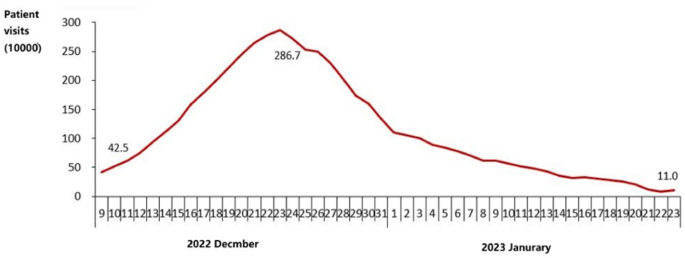
This study adopted a single-center, cross-sectional survey design, involving doctors, nurses, administrators, financial analysts, and clinical technicians currently working at a Tertiary Grade-A hospital in the city of Shenyang, Liaoning Province in China. Eligible participants were:(1) full-time staff;(2) with ≥ 6 months of work experience at the study hospital;(3) voluntarily participating. Exclusion criteria were:(1) on extended leave during data collection;(2) history of mental disorders (e.g., depression, anxiety disorders);(3) incomplete demographic information. The survey was conducted during the first and second weeks of February 2023, at the outset of the routine epidemic prevention and control measures for COVID-19. During this period, HCWs faced a surge of infected patients within a short timeframe, while also bearing increased societal expectations and work pressure. Participants were selected through stratified random sampling, with half of the HCWs from each department invited to participate. A total of 362 HCWs were enrolled, of whom 349 (96.41%) completed the self-report questionnaire with all required measures, forming the analytical sample. The final dataset included responses from these 349 HCWs: 73 doctors, 177 nurses, and 32 other healthcare professionals. To ensure accuracy, two researchers independently entered the data into an Epidata 3.1 database using a double-blind procedure.
This study was conducted in strict accordance with the principles of the Declaration of Helsinki and received ethical approval from the Ethics Committees of China Medical University and China Medical University Shenyang Yongsen Hospital. Informed consent was obtained from each participant before initiating the survey. Crucially, participants were given the option to withdraw from the study at any time, without any requirement to provide a reason for their withdrawal.
Measures
Mental health measures
We included measures of key adverse mental health outcomes with prior evidence of strong psychometric properties: The Patient Health Questionnaire-9 (PHQ-9) to assess depression symptoms. The Generalized Anxiety Disorder-7 (GAD-7) to assess anxiety symptoms. Based on validation studies of each measure, we defined probable depression as PHQ-9 ≥ 10 and probable anxiety as GAD-7 ≥ 5.
Socio-ecological factors
We selected socio-ecological factors on mental health outcomes of HCWs during pandemics. These factors fall into three groups: individual, interpersonal, and institutional.
Individual-level factors
Individual-level factors included age, gender (male/female), marital status (married/single/divorce or widowed), number of dependent children, education-level (associate/bachelor/master/doctor), whether living with parents (yes/no), personal resilience, and adaptability.
Personal resilience was measured by the Chinese version of the Connor-Davidson Resilience Scale (CD-RISC). It is a 25-item scale using a 5-point Likert type response scale from not true at all (0) to true nearly all of the time(4). Participants rated each item with reference to the past month. Total scores range from 0 to 100, with higher scores corresponding to higher levels of resilience. The questionnaire has consistently exhibited robust reliability and validity across diverse populations and countries.
Adaptability was measured by The Work-Life Adaptability Scale of Healthcare Workers Scale (WLASH). It includes 5 dimensions of readiness, work influence, life influence, worry, support, with a total of 21 item. This scale employs a 6-point Likert scale for each item, ranging from “Strongly Disagree” to “Strongly Agree”, with values assigned from 1 to 6 respectively (Items 1–5 and 19–23 are reverse-scored). A higher score indicates a greater degree of influence. This questionnaire has demonstrated strong reliability and validity.
Interpersonal-level factors
Interpersonal-level factors included social support and emotional labor.
Social support, as measured by the Chinese version of the Perceived Social Support Scale (PSSS), comprises a 12-item scale with a seven-point rating (ranging from 1 = strongly disagree to 7 = strongly agree). The scale assesses three sources of support: Family, Friends, and Significant Others. This questionnaire has been utilized within the Chinese population and has exhibited high reliability.
Emotional labor measured using the Emotional Labor Scale (ELS), a 14-item scale using a 5-point Likert type response scale from not true at all(1) to true nearly all of the time(5) self-reported questionnaire. Participants rated each item with reference to the past month. This study investigates emotional display in the workplace among hospital employees, focusing on surface acting, deep acting, and the expression of naturally felt emotions. Surface acting is assessed through seven items, while deep acting is measured with four items. Additionally, the expression of naturally felt emotions is gauged using three items. The Chinese version of the Emotional Labor Scale (ELS) has demonstrated robust factorial validity and reliability in China.
Institutional-level factors
Institutional-level factors included occupation (physician/nurse/other), work experience (<1 year/≤3 years/≤5 years/≤10 years/>10 years), frontline status (yes/no), working hours (6–8 h/9–11 h/≥12 h in the past week), number of rest days after receiving a COVID-19 diagnosis (≤ 5 days/>5 days), income-level (<4000/≤8000/>8000) and burnout.
Burnout was measured using the Maslach Burnout Inventory-Human Services Survey (MBI-HSS). It is a self-report questionnaire comprising 22 items aimed at assessing burnout. This scale is structured into three dimensions: emotional exhaustion (EE), depersonalization (DP), and lack of personal accomplishment (PA). These dimensions are evaluated through specific items, with EE encompassing 9 items, DP including 5 items, and PA involving 8 items, collectively forming a total of 22 items. Each item assesses the frequency of the phenomenon’s occurrence, and responses are scored on a scale from 1 to 7, reflecting the frequency from “never happened” (scored as 1) to “happened every day” (scored as 7). For the EE and DP dimensions, higher scores indicate greater levels of burnout. Conversely, for the PA dimension, which employs a negative scoring method, lower scores signify a higher degree of burnout. The questionnaire has been translated into various languages and widely utilized, demonstrating robust reliability and validity.
Statistical analysis
Analyses were conducted using SPSS version 25, R version 3.4.1 and Python 3.8. Categorical data were presented as frequencies and percentages. Data following a normal distribution were reported as means with standard errors (SE). After completing the descriptive analysis, we applied the random forest variable selection model to identify the key features of depression and anxiety. Finally, we utilized the RFC to build the predictive models for depression and anxiety and to gather detailed information about these models.
The Random Forest (RF) algorithm is an integrated model designed to address classification and regression problems. It stands out for its ability to apply various models for evaluating responses. Compared to other machine learning algorithms, such as neural networks and support vector machines, RF algorithms can efficiently handle both continuous and categorical data sets. In this paper, we employ the RFC to construct the prediction model. The RFC comprises numerous individual decision trees functioning collectively as an ensemble. Each tree within the random forest contributes to the prediction, with the class receiving the most votes determining the model’s overall prediction. One key advantage of the RFC over a single model is its collaborative approach, where each tree classifier, akin to a team member, collectively contributes to the final prediction, often yielding better results than a single decision tree. The RFC is particularly effective for binary classification, capable of managing datasets where the number of variables surpasses the number of observations. It can also handle datasets with a mix of continuous and categorical predictors. Furthermore, the RFC exhibits strong resistance to noise, can process high-dimensional data without feature selection, and is capable of processing various types of data while also ranking the importance of variables. In both the depression and anxiety models, the data were randomly split into two sets: a training set comprising 70% of the sample, and a testing set consisting of the remaining 30%. In this study, we utilized the GridSearchCV method to optimize the parameters of the RFC, a technique aimed at preventing overfitting by pruning the decision tree and removing its terminal nodes.
Given the low prevalence of depression and anxiety among HCWs, we employed the SMOTE to balance the ‘normal’ and ‘abnormal’ categories. The strategy of under-sampling the majority (normal) class and over-sampling the minority (abnormal) class is recognized as an effective method to enhance the sensitivity of classifiers in cases of imbalanced data. In this study, we focused on over-sampling the minority category (depression/anxiety), creating additional samples by randomly selecting and replicating existing samples from this group. Subsequently, this augmented dataset was utilized for both training and testing the model.
In developing the Random Forest Classifier (RFC) model, incorporating local interpretable model-agnostic explanations is essential. This study employed SHAP (SHapley Additive exPlanations) value calculations and evaluations from the trained RFC model to elucidate the model’s data outcomes by assigning importance values to each feature for specific predictions, thereby aiding the interpretation of complex model outputs. Key visualizations included: Summary plots, which provided a comprehensive view of feature importance by displaying the average impact of each variable on model predictions; Beeswarm plots, which revealed the distribution and variability of individual feature effects across different samples. In our analysis, these plots highlighted key determinants (e.g., workload, support resources) influencing mental health status. These techniques were pivotal in validating the model’s interpretability and identifying potential intervention targets for mitigating psychological distress among medical staff.
link